Demolition of the Dolphinarium building on the southern Tel Aviv beachfront began this week. The round building designed by architect Nahum Zolotov and opened in the early 1980s was an important Tel Aviv icon. People originally came to see the trained dolphin shows, followed by an event hall and dance club that became famous as the site of a terrorist attack in 2001. The building has since been semi-abandoned; it served mainly as a surfing club, while the beach on its northern side ("Drums Beach") was used for community gatherings by "spiritual" musicians and dancers.
A still unfinished real estate, planning, and legal saga lies behind the demolition. The Dolphinarium was built at the initiative of businessperson Zvi Efron with financing from South African investors on land leased from Israel Land Authority (ILA). In 1989, German businessperson Josef Buchmann bought the lot for $5 million. 20 years ago, when the Tel Aviv municipality wanted to open the beachfront to the public and continue the promenade there without interference, it signed an agreement with Buchmann's company, Sha'ar L'Israel, for an exchange of land. Buchmann was to have given the Dolphinarium site to the municipality in exchange for 12 dunam (three acres) on the east side of Herbert Samuel Street. Buchmann sold the new site to a group of developers in 2015.
The new plan gives the developers rights to construct 48,000 square meters of hotel, residential, and commercial space; up to 26,500 square meters of above-ground service space; and 36,000 square meters of underground parking space. Construction of a building with 250 square meters on the public space will be allowed. Objections to the plan were filed by the Movement for Quality Government, the Adam Teva V'Din non-profit organization, and representatives of the residents, who claimed that the developer had received irregular and excessive rights.
All the news about White City Residence, upcoming skyscrapers in Tel Aviv and other related news...
Pages
Showing posts with label neve tzedek. Show all posts
Friday, May 18, 2018
Monday, July 31, 2017
Nahalat Binyamin revival gaining traction
The Nahalat Binyamin pedestrian mall with its arts and crafts market is located in central Tel Aviv, several hundred meters from Rothschild Boulevard, near the White City and close to the prestigious homes in Neve Zedek. The street has an unusual concentration of unique architecture. It nevertheless seems, however, that the place is stuck in a time warp. The public space is neglected and rather dirty, the buildings are in a poor physical state, the backyards look like junkyards, and the businesses are outdated. Nevertheless, several new projects were completed this year, and marketing recently began of apartments in HaAmudim House at the intersection of Rambam and Tavor Streets.
The mall area drew quite a lot of public attention in 2001, when developer Ruth Speiser, who was born in the 1950s as a rent-controlled tenant in the house at the intersection of Rambam and Tavor Streets and slowly accumulated properties in the area, announced her intention of setting up a "quarter" that would include a boutique hotel and luxury apartment buildings. Speiser's ideal was innovative, because it mentioned for the first time shared management of the street. The plan included preservation and reconstruction of all the buildings marked for preservation with additional construction, demolishing buildings in the area not marked for preservation, and building new residential buildings in their places.
According to this plan, commercial space and an underground parking lot with 1,500 parking spaces would be built. One of the plan's interesting ideas was developing backyards and creating immediate access to Allenby Street. "A living dream," she told "Globes" in early 2004, "is rejuvenating the home and street on which you were born."
Not much has happened in the area in the 16 years since the heralded launch of the "quarter" plan. The large debts troubled the developers, the banks lost patience, and the buildings that Speiser and Lehi bought moved from hand to hand. In 2007, Nicholas Berggruen acquired six buildings (Michael Chernoy was previously in negotiations that did not succeed). The buildings were sold to YH Dimri Construction & Development Ltd in 2010, which sold Tamar House to French investor Gerard Bentolila for NIS 35 million in 2012. On June 9, Dimri reported that it had signed an option agreement (not for the first time) to sell three more properties on the street: one at 18 Rambam Street, one at 12-16 Rambam Street, and one at 44 Hatavor Street.
The mall area drew quite a lot of public attention in 2001, when developer Ruth Speiser, who was born in the 1950s as a rent-controlled tenant in the house at the intersection of Rambam and Tavor Streets and slowly accumulated properties in the area, announced her intention of setting up a "quarter" that would include a boutique hotel and luxury apartment buildings. Speiser's ideal was innovative, because it mentioned for the first time shared management of the street. The plan included preservation and reconstruction of all the buildings marked for preservation with additional construction, demolishing buildings in the area not marked for preservation, and building new residential buildings in their places.
According to this plan, commercial space and an underground parking lot with 1,500 parking spaces would be built. One of the plan's interesting ideas was developing backyards and creating immediate access to Allenby Street. "A living dream," she told "Globes" in early 2004, "is rejuvenating the home and street on which you were born."
Not much has happened in the area in the 16 years since the heralded launch of the "quarter" plan. The large debts troubled the developers, the banks lost patience, and the buildings that Speiser and Lehi bought moved from hand to hand. In 2007, Nicholas Berggruen acquired six buildings (Michael Chernoy was previously in negotiations that did not succeed). The buildings were sold to YH Dimri Construction & Development Ltd in 2010, which sold Tamar House to French investor Gerard Bentolila for NIS 35 million in 2012. On June 9, Dimri reported that it had signed an option agreement (not for the first time) to sell three more properties on the street: one at 18 Rambam Street, one at 12-16 Rambam Street, and one at 44 Hatavor Street.
Tuesday, December 20, 2016
Penthouses in White City Residence officially on sale
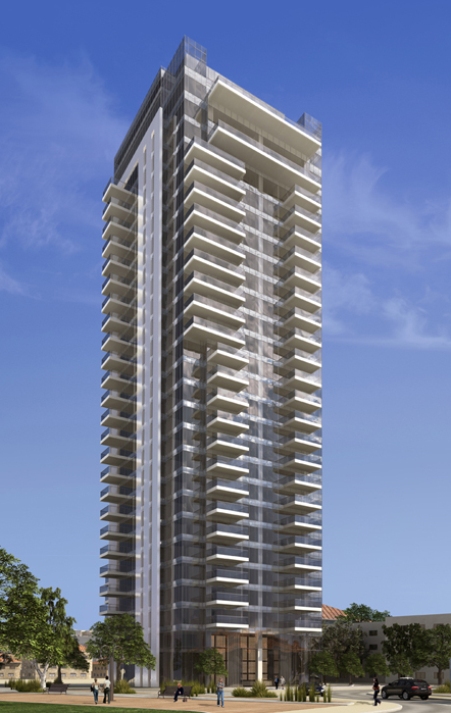
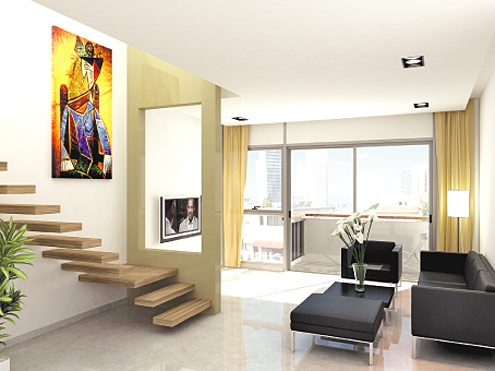
After a soft launch that lasted almost a year, penthouses in White City Residence are now officially on the market. One such penthouse (there are 7 of them) which has been put on sale for NIS 100m occupies 360 m² of the 29th floor and features a 120-m² terrace. That's more than $55,000 per square meter if you account for the terrace at 50% if its surface like it's the market practice.
It will be decorated and accessorised by the Armani studio. White City Residence is located on Yitzhak Elkhanan St. at the edge of the Neve Tzedek neighbourhood, adjacent to Rothschild Ave. Until several years ago, Yitzhak Elkhanan St. near the Carmel Market was considered a neglected area with a relatively low real estate value. But over the last decade, the face of the neighbourhood has changed to the point that it now boasts many luxury developments such as this 161-apartment project. In practice, most of the buyers purchased multiple apartments and connected them, therefore, the current number of apartments totals about 95.
Wednesday, November 30, 2016
Dolphinarium: Surfers to replace dolphins...
After years of acrimonious battles, Dolphinarium deal seems finally underway.
The Appeals Commission from the Regional Planning Committee rejected earlier this month the appeal filed by the the various opponents to the project. Key to the success of the project, was the decision from the Tel Aviv Municipality to promote a plan designed by architects Zionov and Vitkon to build a sports center for surfers in place of the now derelict Dolphinarium.
Under the program, the abandoned complex, which covers over 21 acres of which 3,500 square meters are built, will be demolished and replaced by a small community center dedicated to sports activities. Total size will be around 750 square meters, of which 500 be dedicated to surfboards and equipment storage, offices, classrooms and changing rooms. The other 250 sqm will be used for a cafe or a restaurant. The rest of the area will be open to the public. The municipality reckons that it should take less than a year. But if history is any guide...
Source Timeout
The Appeals Commission from the Regional Planning Committee rejected earlier this month the appeal filed by the the various opponents to the project. Key to the success of the project, was the decision from the Tel Aviv Municipality to promote a plan designed by architects Zionov and Vitkon to build a sports center for surfers in place of the now derelict Dolphinarium.
Under the program, the abandoned complex, which covers over 21 acres of which 3,500 square meters are built, will be demolished and replaced by a small community center dedicated to sports activities. Total size will be around 750 square meters, of which 500 be dedicated to surfboards and equipment storage, offices, classrooms and changing rooms. The other 250 sqm will be used for a cafe or a restaurant. The rest of the area will be open to the public. The municipality reckons that it should take less than a year. But if history is any guide...
Source Timeout
Sunday, May 22, 2016
Neve Tzedek et l'invasion des Bobos
Interesting piece on public French TV channel France 2 on the invasion of French "Bobos"(bourgeois-bohème), those well-off French Jews leaning on the left and who have either emigrated to Israel or bought a place, just in case....
With almost 10 000 French Jews having moved to Israel last year and even more so having bought a place and now spending many months a year in the Holy Land, it's not surprising that the French influence can be witnessed all over the country.
But some neighbourhoods have been more affected than others and Neve Tzedek, because of its European character and charm, has been more popular than others with the French elite. It's no wonder then that property prices in Deauville have plummeted while those in those hip Israeli neighbourhoods like Neve Tzedek, called by some the "Petit Paris", have soared....
With almost 10 000 French Jews having moved to Israel last year and even more so having bought a place and now spending many months a year in the Holy Land, it's not surprising that the French influence can be witnessed all over the country.
But some neighbourhoods have been more affected than others and Neve Tzedek, because of its European character and charm, has been more popular than others with the French elite. It's no wonder then that property prices in Deauville have plummeted while those in those hip Israeli neighbourhoods like Neve Tzedek, called by some the "Petit Paris", have soared....
Sunday, October 18, 2015
Birth of a new avenue in Tel Aviv
More than 100 years after the creation of the first avenue in Tel Aviv, trees were planted on the portion of Yitzhak Elhanan Street that was rebuilt in front the new White City Residence. There has been many discussions as to the what the final look should be but it seems that no decision has been made yet. The idea is to have a new avenue linking Rothschild boulevard to the sea and therefore finishing the Rainbow starting at Kikar Atarim (Ben Gurion, Chen, Rothschild and then Yitzhak Elhanan).
While it seems that the redevelopment of that portion of the avenue is an interim move, it is still a welcome development. We will probably have to wait until the Dolphinarium project goes ahead for good until we know more.
Wednesday, April 15, 2015
Abramovich to turn Tel Aviv hotel into secondary home
Jewish billionaire Roman Abramovich could be spending more time in Israel. The oligarch, ranked the world’s 58th most wealthy person by Forbes, with $12 billion in wealth, has purchased his first property in Israel, Tel Aviv's Varsano Hotel, owned by brothers Guy and Yaron Varsano. The hotel is located between Shabazi Street and Ein Yaakov Street in Tel Aviv’s Neve Tzedek neighborhood.
Abramovich paid NIS 100 million for the property. The lot, which is just 1,500 square meters, includes the landmark hotel which is subject to a preservation order, and an area with a parking lot, which is zoned for additional residential construction. The deal was put together by businessman Eyal Kamir, and Neve Tzedek Real Estate’s Oren Katz. Abramovich was represented in the deal by Hagit Bavly and Ofir Schwartz, of Yigal Arnon & Co., and the Varsano brothers were represented by Shay Rosner and Inna Goldfarb, of Baruch I. Manoach & Co.
Tuesday, September 23, 2014
White City Residence to add another 8 floors?
In addition, the Commission revoked the duties imposed by the municipality to the promoters, such as the road widening, the construction of a kindergarten and a synagogue, as well as the relocation of the Orthodox girls' school Ohel Jakob to Bnei Brak.
Originally the tower was supposed to be a 30-story building and the developers seeked to increase it to 41 floors. They were then given the option to increase the tower to 38 floors in exchange for public duties. But that option was subsequently cancelled following opposition from Neve Tzedek residents.
The developer is now looking at its options as adding the additional floors after the penthouses have already been built will add further costs and delays to the delivery along with significant penalties.
UPDATE: It just took a few days for the Neve Tzedek residents association to appeal the court decision. This drama is therefore far from over. To be continued...
Source The Maker
Friday, August 1, 2014
Patrick Drahi buys Tel Aviv site for NIS 130m
Indeed, he just bought the "Rav Kook" site in Tel Aviv's Neve Tzedek neighborhood for NIS 130 million, not including VAT. The site lies between Hamered, Eliezer Rokach and Ein Yaakov streets. There are several historic buildings on it with strict preservation orders, a few buildings marked for demolition, and some empty lots. Among the buildings designated for preservation is the Rabbi Kook Synagogue, built in 1904, and the study hall of Rabbi Abraham Isaac Kook, who was the first Ashkenazi chief rabbi of Palestine under the British mandate. The site was owned by Yeshuati, a company controlled by US businessman Yaniv Zaguri.
Saturday, March 17, 2012
Thursday, January 5, 2012
White City Residence starting to take shape
As White City Residence reaches floor 15, and as the white finish is being applied to the structure a new marketing video has now appeared.
Enjoy!
Hat tip (again) Tel Aviv Project.
Enjoy!
Hat tip (again) Tel Aviv Project.
Thursday, December 15, 2011
Sarona hoping to compete with Neve Tzedek
At the end of the summer the Ganei Sarona project is expected to open to the public - a new complex for commerce, recreation and entertainment located in the area of the 140-year-old Templer colony that has become part of the urban fabric of Tel Aviv. Sarona is not another ordinary commercial project, but the development of a significant and central piece of the city, 190 dunams (47 acres ) in size. Around the historic buildings and streets there are plans to build about 10 high-rise buildings that will include tens of thousands of square meters of housing, hotels, commerce and a convention center.
The 33 original houses of the colony, or what remains of them after over 60 years of ownership by the State of Israel, will be carefully preserved and used for new purposes: 27 will serve as shops, restaurants and cafes, and the other six will become a visitors' center, two museums and a unit to be leased to the Technion-Israel Institute of Technology. The preservation and development work now in full swing includes the rehabilitation of the local flora and the preservation of the mature trees that lend the place a special atmosphere. A new underground road will connect the main arteries surrounding the complex with underground parking lots and the Hashalom train station, along with a future light rail station on Yehudit Boulevard that will enable easy access via public transportation.
The project is being developed simultaneously by the Ganei Sarona management company, which operates under the aegis of the municipal Ahuzot Hahof corporation, and two groups of entrepreneurs: the Irani-Rogovin partnership and Ganei Sarona Ltd. (which is composed of several private companies and investors). In a discussion this week, the entrepreneurs expressed their hope of creating a unique urban complex that will grant added value to the shopping experience and will also succeed in attracting Tel Aviv residents - a "hard nut to crack," according to one of them. Ganei Sarona is based on the "lifestyle center" model, a new type of retail center developed in the United States during the 1990s that constitutes a kind of counterreaction to the closed malls. These centers were built for the most part near well-to-do suburban communities. They have a well balanced mix of commercial and recreational uses, and include a large number of squares, manicured gardens, fountains and well designed public spaces - and attempt to provide an experience of enjoyable loitering that will encourage visitors to linger in them for a long time. In other words, they are trying to imitate a classic urban center - but in a totally controlled, directed and supervised way. You won't see any peeling plaster or homeless people there, the corporation in charge will make sure to get rid of them within a short time.
Ran Steinman, one of the entrepreneurs, says that one of the main inspirations for Sarona is a famous lifestyle center in Los Angeles called The Grove, which was built on the area of a historic farmers' market. The entrepreneurs constructed a series of pseudo-historical buildings there, with magnificent facades in the spirit of the local architecture. It may be terrible kitsch, but the complex is considered a dizzying commercial success. "There is one building that is leased to a movie theater, one that belongs to Apple and many good restaurants. Outside they play a little music - it's an amazing thing," says Steinman. Amit Yulevitz, the CEO of Sarona, thinks that the public is seeking the open air and the experience of wandering around typical of city centers. "We don't see ourselves as competing with some mall. Those who want to do traditional shopping in malls will continue to go there, but anyone who wants high-class shopping and a different atmosphere will come to Sarona."
The Sarona marketing campaign reflects the desire of the entrepreneurs to connect to high-end businesses in Israel. Instead of large fashion chains or cafe chains, they tried to attract designer stores and chefs' restaurants. And in general, the historical legacy of the place seems to be an inseparable part of the marketing. The potential leasers have received a comprehensive file that includes, among other things, a naive illustration of the complex that shows stone houses alongside high rises, and romantic postcards that include information about each and every building. The entrepreneurs call them a "collection." At the same time, the entrepreneurs realize that the success of the complex depends not only on attracting successful businesses but also on close cooperation with the municipal administration that is responsible for Sarona.
"There is symbiosis here between the public space and the private space," explains Gadi Roitman of the Ganei Sarona management company. "The buildings cannot work without the park, while the public space cannot work without the buildings." He says that the planning of the public space between the buildings includes attention to commercial needs, such as areas for tables and chairs or the creation of an infrastructure for an air conditioning system (which due to preservation restrictions will not be placed outside the buildings ). Another reflection of cooperation between the entrepreneurs and the municipality will come in the form of various events to be held on the site throughout the year.
The close cooperation and mutual admiration between the parties is an example of proper development of public space. Sarona joins additional complexes in Tel Aviv that are based on cooperation between the private and public sectors: the Tel Aviv port and the train station complex. What the three complexes have in common is the creation of a distinct and defined urban space based on an historic site and operated by one body. This model has many economic advantages, because in effect it is run and maintained just like a mall. On the other hand, it lacks the spontaneity and heterogeneity that typifies a city center. Both the port and the train station are facing difficulties that stem from the fact that they are complexes that are not an integral part of the urban fabric. On the one hand they cater to a yuppie clientele, and on the other, during the week they attract mainly tourists.
The entrepreneurs, both from the municipality and the private companies, explain that they have learned the lesson from the other complexes in Tel Aviv and that Sarona's central location will ensure traffic of about 17,000 people daily, not including tourists. Now we have to wait for the opening to see whether they will succeed in restoring the Templer colony's intimate and charming character, in spite of the numbers of visitors, or whether it will turn into a branded and commercial product in which history serves only as a romantic backdrop for a day of shopping.
Source Haaretz
The 33 original houses of the colony, or what remains of them after over 60 years of ownership by the State of Israel, will be carefully preserved and used for new purposes: 27 will serve as shops, restaurants and cafes, and the other six will become a visitors' center, two museums and a unit to be leased to the Technion-Israel Institute of Technology. The preservation and development work now in full swing includes the rehabilitation of the local flora and the preservation of the mature trees that lend the place a special atmosphere. A new underground road will connect the main arteries surrounding the complex with underground parking lots and the Hashalom train station, along with a future light rail station on Yehudit Boulevard that will enable easy access via public transportation.
The project is being developed simultaneously by the Ganei Sarona management company, which operates under the aegis of the municipal Ahuzot Hahof corporation, and two groups of entrepreneurs: the Irani-Rogovin partnership and Ganei Sarona Ltd. (which is composed of several private companies and investors). In a discussion this week, the entrepreneurs expressed their hope of creating a unique urban complex that will grant added value to the shopping experience and will also succeed in attracting Tel Aviv residents - a "hard nut to crack," according to one of them. Ganei Sarona is based on the "lifestyle center" model, a new type of retail center developed in the United States during the 1990s that constitutes a kind of counterreaction to the closed malls. These centers were built for the most part near well-to-do suburban communities. They have a well balanced mix of commercial and recreational uses, and include a large number of squares, manicured gardens, fountains and well designed public spaces - and attempt to provide an experience of enjoyable loitering that will encourage visitors to linger in them for a long time. In other words, they are trying to imitate a classic urban center - but in a totally controlled, directed and supervised way. You won't see any peeling plaster or homeless people there, the corporation in charge will make sure to get rid of them within a short time.Ran Steinman, one of the entrepreneurs, says that one of the main inspirations for Sarona is a famous lifestyle center in Los Angeles called The Grove, which was built on the area of a historic farmers' market. The entrepreneurs constructed a series of pseudo-historical buildings there, with magnificent facades in the spirit of the local architecture. It may be terrible kitsch, but the complex is considered a dizzying commercial success. "There is one building that is leased to a movie theater, one that belongs to Apple and many good restaurants. Outside they play a little music - it's an amazing thing," says Steinman. Amit Yulevitz, the CEO of Sarona, thinks that the public is seeking the open air and the experience of wandering around typical of city centers. "We don't see ourselves as competing with some mall. Those who want to do traditional shopping in malls will continue to go there, but anyone who wants high-class shopping and a different atmosphere will come to Sarona."
The Sarona marketing campaign reflects the desire of the entrepreneurs to connect to high-end businesses in Israel. Instead of large fashion chains or cafe chains, they tried to attract designer stores and chefs' restaurants. And in general, the historical legacy of the place seems to be an inseparable part of the marketing. The potential leasers have received a comprehensive file that includes, among other things, a naive illustration of the complex that shows stone houses alongside high rises, and romantic postcards that include information about each and every building. The entrepreneurs call them a "collection." At the same time, the entrepreneurs realize that the success of the complex depends not only on attracting successful businesses but also on close cooperation with the municipal administration that is responsible for Sarona.
"There is symbiosis here between the public space and the private space," explains Gadi Roitman of the Ganei Sarona management company. "The buildings cannot work without the park, while the public space cannot work without the buildings." He says that the planning of the public space between the buildings includes attention to commercial needs, such as areas for tables and chairs or the creation of an infrastructure for an air conditioning system (which due to preservation restrictions will not be placed outside the buildings ). Another reflection of cooperation between the entrepreneurs and the municipality will come in the form of various events to be held on the site throughout the year.
The close cooperation and mutual admiration between the parties is an example of proper development of public space. Sarona joins additional complexes in Tel Aviv that are based on cooperation between the private and public sectors: the Tel Aviv port and the train station complex. What the three complexes have in common is the creation of a distinct and defined urban space based on an historic site and operated by one body. This model has many economic advantages, because in effect it is run and maintained just like a mall. On the other hand, it lacks the spontaneity and heterogeneity that typifies a city center. Both the port and the train station are facing difficulties that stem from the fact that they are complexes that are not an integral part of the urban fabric. On the one hand they cater to a yuppie clientele, and on the other, during the week they attract mainly tourists.The entrepreneurs, both from the municipality and the private companies, explain that they have learned the lesson from the other complexes in Tel Aviv and that Sarona's central location will ensure traffic of about 17,000 people daily, not including tourists. Now we have to wait for the opening to see whether they will succeed in restoring the Templer colony's intimate and charming character, in spite of the numbers of visitors, or whether it will turn into a branded and commercial product in which history serves only as a romantic backdrop for a day of shopping.
Source Haaretz
Saturday, November 26, 2011
Israel wants to make it big in fashion too
After two years of preparation and strong support from Italy, the first Israel Fashion Week in thirty years came this week to Neve Tzedek, the hip neighborhood in Tel Aviv. For three days, media, models, and designers highlighted Israeli and Italian fashion.
It’s not that Israeli designers are unknown to the world’s fashion mavens. Some of them are known, but more on an individual basis than as a collective. Just as Italy and France are known as fashion countries, aside from the kudos given to individual designers, so Israel is known as a hi-tech country, as Tel Aviv Mayor Ron Huldai mentioned at a reception hosted by Italian Ambassador Luigi Mattiolo to mark the launch of the project. The Italian ambassador was involved because Tel Aviv and Milan are twin cities. Also, the creator of of the garments in the gala fashion show paraded on Monday night at the old Jaffa Railway Station, which has been turned into a lifestyle hub and a major tourist attraction, was one of Italy’s leading fashion luminaries, Roberto Cavalli.
Three decades ago, when Israel fashion weeks were the glitz and glitter of the industry, they were held in hotels – primarily in Tel Aviv, but also in Jerusalem and Eilat. Asked if there was a special reason for holding the Tel Aviv Fashion Week at the rail station, Lev said that in a previous era hotel rooms were turned into showrooms, but fashion is much more than that. It lends itself to lifestyle and lifestyle includes tourism. Indeed, the Ministry of Tourism is a major partner in the venture and brought 60 leading international fashion and lifestyle journalists to Israel to not only cover the fashion week but to tour the country and see how different it is to what is portrayed on television screens back home.
This is in line with the ministry’s new focus on lifestyle and niche tourism. Without the publicity that will be generated abroad by these journalists, Fashion Week would be a flop. Many visiting journalists were already busy with their laptops on Monday morning. At the reception at his residence Sunday, Mattiolo expressed heartfelt appreciation to Tourism Minister Stas Meseznikov. Silvan Shalom, minister for the development of the Negev and the Galilee, who was the guest speaker at the reception said “Fashion Week gives us a chance to show the other side of Israel, which we would like the world to recognize.”
Future Tel Aviv Fashion Weeks will also have an Italian star component. There will be two Tel Aviv Fashion Weeks each year – one spring/summer and the other fall/winter. And plans are already afoot to show the fall/winter creations in April 2012.
It’s not that Israeli designers are unknown to the world’s fashion mavens. Some of them are known, but more on an individual basis than as a collective. Just as Italy and France are known as fashion countries, aside from the kudos given to individual designers, so Israel is known as a hi-tech country, as Tel Aviv Mayor Ron Huldai mentioned at a reception hosted by Italian Ambassador Luigi Mattiolo to mark the launch of the project. The Italian ambassador was involved because Tel Aviv and Milan are twin cities. Also, the creator of of the garments in the gala fashion show paraded on Monday night at the old Jaffa Railway Station, which has been turned into a lifestyle hub and a major tourist attraction, was one of Italy’s leading fashion luminaries, Roberto Cavalli.
Three decades ago, when Israel fashion weeks were the glitz and glitter of the industry, they were held in hotels – primarily in Tel Aviv, but also in Jerusalem and Eilat. Asked if there was a special reason for holding the Tel Aviv Fashion Week at the rail station, Lev said that in a previous era hotel rooms were turned into showrooms, but fashion is much more than that. It lends itself to lifestyle and lifestyle includes tourism. Indeed, the Ministry of Tourism is a major partner in the venture and brought 60 leading international fashion and lifestyle journalists to Israel to not only cover the fashion week but to tour the country and see how different it is to what is portrayed on television screens back home.
This is in line with the ministry’s new focus on lifestyle and niche tourism. Without the publicity that will be generated abroad by these journalists, Fashion Week would be a flop. Many visiting journalists were already busy with their laptops on Monday morning. At the reception at his residence Sunday, Mattiolo expressed heartfelt appreciation to Tourism Minister Stas Meseznikov. Silvan Shalom, minister for the development of the Negev and the Galilee, who was the guest speaker at the reception said “Fashion Week gives us a chance to show the other side of Israel, which we would like the world to recognize.”
Future Tel Aviv Fashion Weeks will also have an Italian star component. There will be two Tel Aviv Fashion Weeks each year – one spring/summer and the other fall/winter. And plans are already afoot to show the fall/winter creations in April 2012.
Monday, October 10, 2011
New financing options to accelerate light rail build-up
A pending compromise between the Tel Aviv Municipality and the government proposes greatly increasing building rights in the city to 700-800% from 400% in exchange for a subway. The increased building rights would generate hundreds of millions in taxes for the government and would offset the huge additional cost in building the light rail's Green Line as a subway.
The increased building rights will not necessary apply to the area along a 2.5-kilometer stretch of the Green Line's route between Carlebach Street and the northern end of Ibn Gvirol Street. The 24-kilometer Green Line will run from Rishon LeZion in the south to the Yarkon River in north Tel Aviv, and may later be extended to Herzliya. The line was originally planned as an above-ground light rail, which Tel Aviv Mayor Ron Huldai opposes. The Tel Aviv Municipality said, "The lot in the Kirya area, along the Red Line, is also relevant to the initiative."
A source involved with the project said that preliminary estimates suggest that the increased building rights will be sufficient to finance the NIS 1.5-2 billion cost of the Green Line. The line could result in the construction of 25,000-30,000 new apartments in the Large Lot in the Transyarkon area of north Tel Aviv. The Tel Aviv Municipality and the Ministry of Finance already agree that the Green Line section between Levinski Street in South Tel Aviv and Carlebach Street would be underground, but they have disagreed for years about the stretch north of Carlebach Street. Officially, the ministry consents only to an above-ground line, and insists that the Tel Aviv Municipality finance the extra cost in full for an underground line. The municipality says that this is not possible.
In addition to the Dan Region Light Rail's Red and Green lines, a Purple Line is in the statutory stages, and four bus rapid transit (BRT) lines are planned. The Tel Aviv Municipality said in response, "The municipality believes that it is very important to build the Green Line, at the same time as the Red Line, as a subway between Levinski Street and the Yarkon River. We believe that maximizing the building rights in the Kirya area can generate the financial sources needed. However, talks are only in the initial stages, and we hope that an agreement can be reached to build the Green Line as quickly as possible."
Source Globes
The increased building rights will not necessary apply to the area along a 2.5-kilometer stretch of the Green Line's route between Carlebach Street and the northern end of Ibn Gvirol Street. The 24-kilometer Green Line will run from Rishon LeZion in the south to the Yarkon River in north Tel Aviv, and may later be extended to Herzliya. The line was originally planned as an above-ground light rail, which Tel Aviv Mayor Ron Huldai opposes. The Tel Aviv Municipality said, "The lot in the Kirya area, along the Red Line, is also relevant to the initiative."
A source involved with the project said that preliminary estimates suggest that the increased building rights will be sufficient to finance the NIS 1.5-2 billion cost of the Green Line. The line could result in the construction of 25,000-30,000 new apartments in the Large Lot in the Transyarkon area of north Tel Aviv. The Tel Aviv Municipality and the Ministry of Finance already agree that the Green Line section between Levinski Street in South Tel Aviv and Carlebach Street would be underground, but they have disagreed for years about the stretch north of Carlebach Street. Officially, the ministry consents only to an above-ground line, and insists that the Tel Aviv Municipality finance the extra cost in full for an underground line. The municipality says that this is not possible.
In addition to the Dan Region Light Rail's Red and Green lines, a Purple Line is in the statutory stages, and four bus rapid transit (BRT) lines are planned. The Tel Aviv Municipality said in response, "The municipality believes that it is very important to build the Green Line, at the same time as the Red Line, as a subway between Levinski Street and the Yarkon River. We believe that maximizing the building rights in the Kirya area can generate the financial sources needed. However, talks are only in the initial stages, and we hope that an agreement can be reached to build the Green Line as quickly as possible."
Source Globes
Sunday, March 13, 2011
Aviv Group Acquires Lieber Tower for NIS 200m
The Lieber Tower project situated at 39 Pines Street right next to the Neve Tsedek tower and that became a symbol of the struggle between the residents of Neve Tzedek and luxury tower developers has just changed hands. Aviv Group, controlled by Doron Aviv and Dafna Har Lev, announced today that it has signed an agreement to acquire the complex from Moshe Gavrieli of Intercolony Investments. Aviv will pay about 200 million shekels upfront with a potential extra 10m if flat sales to June 2011 reach NIS 512m.
The current approved plan is a tower of 28 floors with up to 150 apartments. At this point however, the company only plans to bring 105 apartments to market. In May 2009, the local planning and building committee approved construction of a high-rise on the site of the former Lieber chocolate factory south of Neveh Tzdek. Preliminary plans for the project were developed by world-famous architect Daniel Libeskind in collaboration with local architect Rani Zis. The planning for the project has since been taken over by architect Avner Yashar who is also overseeing the Rothschild Ehad and White City Residence projects. Apartments in the tower have been selling so far at prices ranging from NIS 40,000 to NIS 60,000 depending on location.
Aviv Group reports that even before signing the deal 80 apartments totaling NIS 480 million had already been sold. The company estimates that revenues from the project will reach over NIS 560 million. Doron Aviv, Aviv Group Chairman, commented: "Aviv's real estate activity is concentrated in areas where there is high demand. I believe that Tel Aviv, especially in the south, presents us with great business potential and I have no doubt that the area's strategic location will generate great interest among potential buyers as evidenced by the early sales".
Source The Marker
The current approved plan is a tower of 28 floors with up to 150 apartments. At this point however, the company only plans to bring 105 apartments to market. In May 2009, the local planning and building committee approved construction of a high-rise on the site of the former Lieber chocolate factory south of Neveh Tzdek. Preliminary plans for the project were developed by world-famous architect Daniel Libeskind in collaboration with local architect Rani Zis. The planning for the project has since been taken over by architect Avner Yashar who is also overseeing the Rothschild Ehad and White City Residence projects. Apartments in the tower have been selling so far at prices ranging from NIS 40,000 to NIS 60,000 depending on location.
Aviv Group reports that even before signing the deal 80 apartments totaling NIS 480 million had already been sold. The company estimates that revenues from the project will reach over NIS 560 million. Doron Aviv, Aviv Group Chairman, commented: "Aviv's real estate activity is concentrated in areas where there is high demand. I believe that Tel Aviv, especially in the south, presents us with great business potential and I have no doubt that the area's strategic location will generate great interest among potential buyers as evidenced by the early sales".
Source The Marker
Friday, October 1, 2010
Fancy a penthouse in Tel Aviv?
Penthouse sales have reached new levels in the last few years in Tel Aviv. Last year, for example, the penthouse in the Sea One project was sold for NIS 110 million. Even more recently, Eyal Ofer bought the top flat at Ofer Tower, also on Herbert Samuel Street, for a cool NIS 115 million.
If you fancy a penthouse too, here is a sample of what's available on the market...
NIS 33 million - USD 9 million
Location: Koifman Street
Floor: 4
Flat Size: 800 sqm
Terrace Size: 120 sqm
Landscape panoramic sea view
Maintenance: NIS 8,000 / month
The apartment's ceiling is about six feet tall, has no external walls and is surrounded by a glass wall overlooking the sea. The apartment is on one level and includes, private indoor pool, sauna and Jacuzzi. Penthouse is owned by a foreign resident who bought the apartment a few years ago and uses it as his holiday apartment. He recently bought another apartment, no less prestigious, and has therefore put this one on the market.
NIS 25 million - USD 7 million
Location: Dubnov Street
Floor: 7
Flat Size: 460 sqm
Terrace Size: 130 sqm
View: 360 degrees of full cityscape
Maintenance: NIS 300 / month
The apartment is located in the city center, but in a quiet area and close to cultural and entertainment centers. It has seven bedrooms, four bathrooms and a shower, high ceilings (3.40 meters), central vacuum and heating-floor. Apartment building has three parking spaces.
NIS 5.5 million - USD 1.5 million
Location: Alexander Argov Street
Floor: 2-3
Flat Size: 170 sqm
Terrace Size: 80 sqm
Landscape: a neighborhood park
Maintenance: NIS 2,200 /month
The apartment is a duplex penthouse renovated last year invested at a cost of one million shekels. It includes four bedrooms, high quality flooring, with a mosaic ceiling in the bathroom and has a living room window which provides light all day long. The apartment building includes an Olympic pool, a jacuzzi, a sauna, a steam room and 24 hour a day maintenance.
NIS 11 million - USD 3 million
Location: Hamelits Street
Floor: Fifth sixth floors
Flat Size: 250 sqm
Terrace Size: 70 sqm on the top floor
View: 360 degrees
Maintenance: NIS 550 / month
The apartment is in a new building next to Meir Garden in Tel Aviv. The penthouse was designed and built for a couple, so it includes only two bedrooms. All accommodation services are located on the first floor, the second floor includes two rooms, a kitchenette, a bathroom and a 360 degree balcony. The flat has two parking spaces and an private lift. The design was done by an architect specializing in the design galleries, and includes a mosaic bath, a raised black parquet in the bedroom, parquet floors, windows and closets throughout the apartment with Chinese designs in all baths.
NIS 7.5 million - USD 2 million
Location: HaGanim Street in Ramat Hasharon
Floor: 16
Flat Size: 200 sqm
Terrace Size: 100 sqm
Landscape cityscape of Tel Aviv, Petah Tikva, Ramat Gan, Netanya Sea
Maintenance: NIS 500 / month
The apartment is the highest in the region, as all the buildings in the neighborhood are up to ten stories only. The penthouse is on one level, it has high ceilings and a design made of bright shades of metallic purple mosaic. There is is a huge 50 sqm bedroom, two additional bedrooms and a study. Building has two covered parking spaces.
NIS 9.6 million - USD 2.6 million
Location: Isrotel in Hayarkon Street
Floor: 22
Flat Size: 194 sqm
Terrace Size: 50 sqm
Landscape panoramic sea view, from Jaffa to Herzliya
Maintenance fees: about NIS 2,400 a month
The apartment was designed so that it includes only one bedroom with a balcony area of 10 sqm, the rest of the apartment being the living room and kitchen. The building includes a gym, a swimming pool and a convention hall lobby. The adjacent penthouse is also for sale so you can purchase both flats for a total of 316 sqm and USD 3.4 million.
NIS 100 million - USD 27 million
Location: Corner Nehardea & Barry
Floor: 30-31
Flat Size: 1,000 sqm
Terrace Size : 80 sqm
View: State Square, Central Tel Aviv to the sea
Maintenance: NIS 14,000 / month
Almost impossible to find an apartment this size in town. The penthouse was built on two floors and was designed by architect Moshe Tzur. The building is the heart of Tel Aviv and includes a swimming pool, gym, a residents club and 24 hours security.
NIS 76 million - USD 21 million
Location: Yitzhak Elhanan Street - White City Residence
Floor: 40
Flat Size: 578 sqm
Terrace Size: 115 sqm
Landscape: panoramic sea view
Maintenance: NIS 8,000 / month
The project is currently under construction. The apartment is on one level and located in the picturesque neighborhood of Neve Tzedek, about 300 meters from the beach. The apartment design is done by the Italian designer Giorgio Armani. It includes a Jacuzzi for ten people on the roof overlooking the sea.
NIS 3.6 million - USD 1 million
Location: Montefiore Street
Floor: 4-5
Flat Size: 100 sqm
Terrace Size: 15 sqm on the lower level, 55 sqm on the top floor
Scenery: Sea
Maintenance: about NIS 450 / month
The project is currently under construction. A boutique located in the heart of the historic fabric of the White City, minutes away from the cultural center, recreation and shopping. This duplex penthouse has four rooms on the lower floor and a spacious suite on the top floor. Granite porcelain flooring, electric roller shutters equip the flat. Included in the price is an underground parking.
NIS 39 million
Location: Herbert Samuel Street - Sea One Project
Floor: 20
Flat Size: 300 sqm
Terrace Size: 30 sqm
Landscape: the sea and along the promenade - Jaffa, Tel Aviv Marina
Maintenance: NIS 4,400 / month
The project is currently under construction. The apartment includes three bedrooms, each room with a sea view. Apart from panoramic views, high ceilings are planned at a height of six meters. The residential building will also house a hotel, but with a clear separation of the two - a separate parking, separate elevators and separate entrance lobby. However, tenants will benefit from services of a five-star hotel.
Sunday, September 26, 2010
Tel Aviv Light Rail project back on track
The Tel Aviv area light rail project is back on the rails again - with the state paying for it. Two weeks after cancelling the tender for the MTS franchisee, the government company in charge of the planned public transportation plan, NTA - Metropolitan Mass Transit System, issued a tender on Wednesday for planning the tunnels to be dug. The new budget for the project is NIS 10.7 billion and the new date for the completion of the first section, the Red Line, is scheduled for Dec. 31, 2017.
The new tender came after the finance and transportation ministries approved changing their plan for the tunnels. The new digging method will cut the time needed for the work and not require pumping out groundwater. But there are disadvantages too. The new method will require more work on the surface during construction, which will lead to more traffic jams and other disruptions - in particular within Tel Aviv.
The 23-kilometer Red Line from Bat Yam to Petah Tikva will be divided into three sections. Some 11 kilometers will be underground from Menashiya in south-west Tel Aviv via Jabotinsky Street to Ramat Gan and Bnei Brak, and on to the Geha junction. Out of the 33 planned stations, 23 will be underground, about a kilometer apart on average.
The official approval for funding the light rail project from the state budget will only come after the Sukkot holiday, and will require cabinet approval. The original tender was for a Buy, Operate and Transfer (BOT ) project financed by the tender winner, but MTS ran into financing problems as a result of the global financial crisis.
Wednesday's tender was only for the planning of three large shafts through which the tunnel boring machine would be introduced. The proposed method for tunneling is called "cut and cover," in which the tunneling digs up the surface as it proceeds and then is covered up. This is the method commonly used in Israel for most underground projects up to now. Part of the construction of the new Tel Aviv-Jerusalem high speed rail line is using this method. The tunneling machine will be lowered into the shafts and large underground spaces, through which both building materials and the material dug up will brought in and out.
MTS had proposed "deep mining," in which almost all the work takes place underground. However, due to Tel Aviv's high groundwater level, engineering professionals were worried that not all the possible problems were taken into account in the deep mining proposal.
Source Haaretz
The new tender came after the finance and transportation ministries approved changing their plan for the tunnels. The new digging method will cut the time needed for the work and not require pumping out groundwater. But there are disadvantages too. The new method will require more work on the surface during construction, which will lead to more traffic jams and other disruptions - in particular within Tel Aviv.
The 23-kilometer Red Line from Bat Yam to Petah Tikva will be divided into three sections. Some 11 kilometers will be underground from Menashiya in south-west Tel Aviv via Jabotinsky Street to Ramat Gan and Bnei Brak, and on to the Geha junction. Out of the 33 planned stations, 23 will be underground, about a kilometer apart on average.
The official approval for funding the light rail project from the state budget will only come after the Sukkot holiday, and will require cabinet approval. The original tender was for a Buy, Operate and Transfer (BOT ) project financed by the tender winner, but MTS ran into financing problems as a result of the global financial crisis.
Wednesday's tender was only for the planning of three large shafts through which the tunnel boring machine would be introduced. The proposed method for tunneling is called "cut and cover," in which the tunneling digs up the surface as it proceeds and then is covered up. This is the method commonly used in Israel for most underground projects up to now. Part of the construction of the new Tel Aviv-Jerusalem high speed rail line is using this method. The tunneling machine will be lowered into the shafts and large underground spaces, through which both building materials and the material dug up will brought in and out.
MTS had proposed "deep mining," in which almost all the work takes place underground. However, due to Tel Aviv's high groundwater level, engineering professionals were worried that not all the possible problems were taken into account in the deep mining proposal.
Source Haaretz
Wednesday, September 22, 2010
Tuesday, September 14, 2010
Are the French invading Neve Tzedek?
Three French residents have acquired five apartments for a total of NIS 22 million last month in the White City Residence project (Neve Tzedek by the Sea).
Are foreign residents returning to the Israeli real estate market? It looks like it. One buyer bought two flats on the 7th floor totalling 200 sqm for NIS 8.5 million (making the price per sqm at NIS 42.5k or USD 11.3K). Another buyer purchased a similar surface on the 11th floor for NIS 9 million translating into a price per sqm of NIS 45k or USD 12K. And on that same floor a 100 sqm flat was sold for NIS 4.7 million reflecting a price per sqm of NIS 47k or USD 12.5k. All apartments include a balcony overlooking the sea, a storage room and an underground parking.
The project, whose construction began last year, is located along Isaac Elhanan and is owned by Eurocom Real Estate, Hammerman and a group of investors from Belgium. It includes 160 apartments on 40 floors. The project has sold 71 flats so far for a value of more than NIS 300 million. Buyers are mostly business people from Israel, Switzerland, Venezuela, France and England.
The company said that they had now completed the excavation work and that they were now working on building the underground parking lot. Ran Ben-Avraham, vice president of marketing at Hammerman said: "As every summer, we saw increased interest from foreign residents for our project. What is surprising this year is that the decision process was so quick and that transactions were carried out in such a short timeframe. It seems that Europeans have identified White City Residence as an attractive destination in Tel Aviv and are bringing one another to the table".
For a live Webcam of the construction site, just click here.
Are foreign residents returning to the Israeli real estate market? It looks like it. One buyer bought two flats on the 7th floor totalling 200 sqm for NIS 8.5 million (making the price per sqm at NIS 42.5k or USD 11.3K). Another buyer purchased a similar surface on the 11th floor for NIS 9 million translating into a price per sqm of NIS 45k or USD 12K. And on that same floor a 100 sqm flat was sold for NIS 4.7 million reflecting a price per sqm of NIS 47k or USD 12.5k. All apartments include a balcony overlooking the sea, a storage room and an underground parking.
The project, whose construction began last year, is located along Isaac Elhanan and is owned by Eurocom Real Estate, Hammerman and a group of investors from Belgium. It includes 160 apartments on 40 floors. The project has sold 71 flats so far for a value of more than NIS 300 million. Buyers are mostly business people from Israel, Switzerland, Venezuela, France and England.
The company said that they had now completed the excavation work and that they were now working on building the underground parking lot. Ran Ben-Avraham, vice president of marketing at Hammerman said: "As every summer, we saw increased interest from foreign residents for our project. What is surprising this year is that the decision process was so quick and that transactions were carried out in such a short timeframe. It seems that Europeans have identified White City Residence as an attractive destination in Tel Aviv and are bringing one another to the table".
For a live Webcam of the construction site, just click here.
Monday, September 6, 2010
Committee sets height limits for Neve Tzedek
A sub-committee of the Tel Aviv district planning and building committee ruled to restrict construction in 54 dunams (13.5 acres) at the southern end of the historic Neve Tzedek neighbourhood to two-story buildings.
After years of stalemate during which all construction plans for the area were put on hold, the subcommittee approved a plan that includes preserving building facades. It also allows for development of hotels and residential and commercial construction. The move comes in the wake of controversy created by the 38-story Neve Tzedek tower on the southern end of the neighbourhood.
Several other towers are planned on the neighborhood's periphery. The subcommittee gave the green light to some three-story structures on the edges of the tract. Deputy Mayor Pe'er Visner said the plan would be appealed for being too restrictive, while the neighborhood committee in the area said the plan would still damage the neighborhood's character.
Source Haaretz
After years of stalemate during which all construction plans for the area were put on hold, the subcommittee approved a plan that includes preserving building facades. It also allows for development of hotels and residential and commercial construction. The move comes in the wake of controversy created by the 38-story Neve Tzedek tower on the southern end of the neighbourhood.
Several other towers are planned on the neighborhood's periphery. The subcommittee gave the green light to some three-story structures on the edges of the tract. Deputy Mayor Pe'er Visner said the plan would be appealed for being too restrictive, while the neighborhood committee in the area said the plan would still damage the neighborhood's character.
Source Haaretz
Subscribe to:
Posts (Atom)