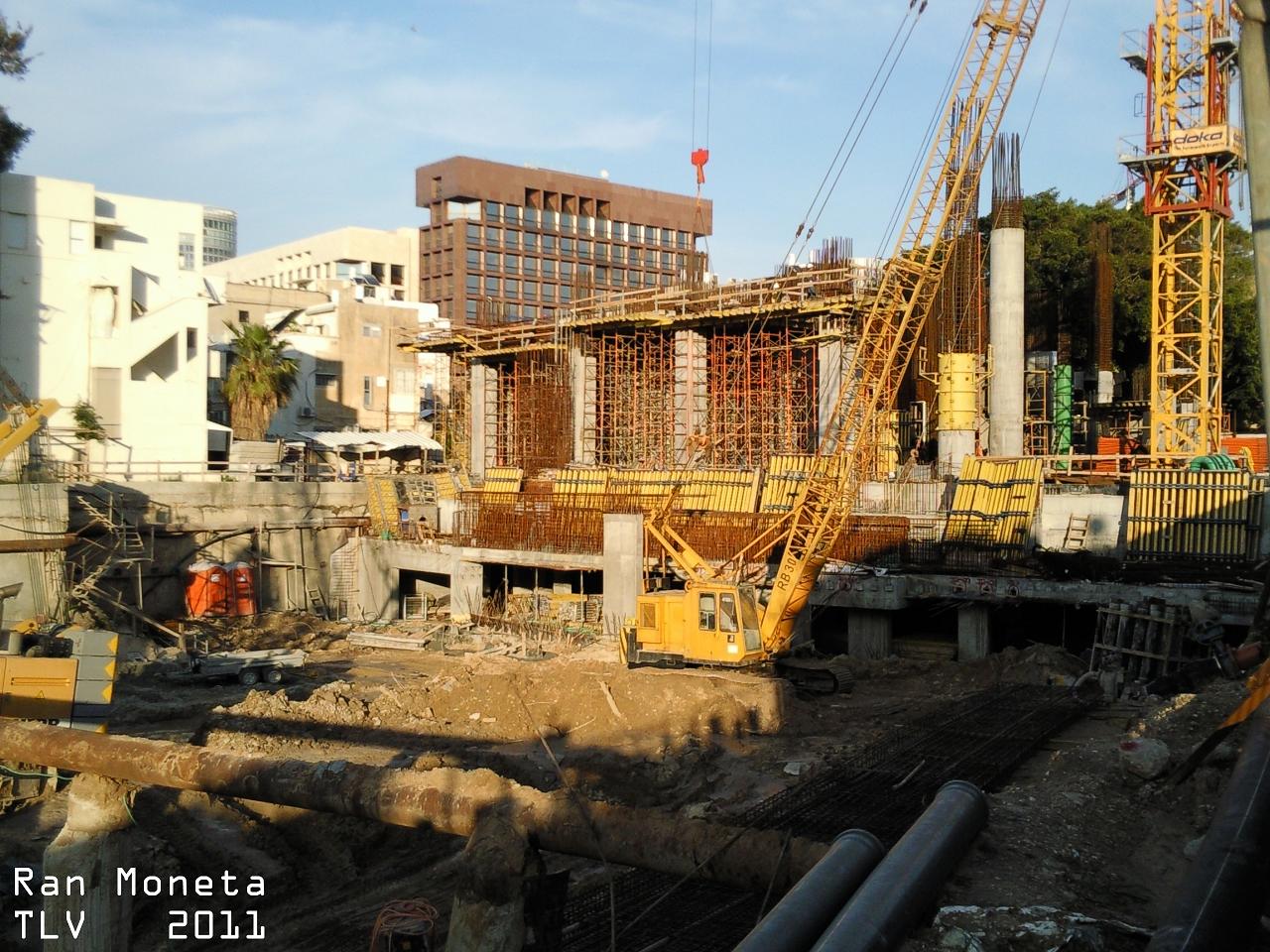
Ichilov Hospital in Tel Aviv just unveiled the largest bomb-proof emergency facility in the country, which includes a four-story structure embedded underground and ensconced in a new building that bears the name of billionaire Sammy Ofer. The building is designed to hold between 700 and 1,000 hospital beds in case of an emergency. When not under attack, the multi-level underground structure will serve as a short-term parking lot for patients.
The new facility measures 56,000 square meters, with 13 floors above ground and 4 underground. It was built at an estimated cost of $110 million. Ofer donated $45 million to the endeavor. The facility, which provides protection against conventional, chemical, and biological attack, has also been fitted with water pipes, oxygen, electricity, ventilation, and enough fuel for generators to last one week if cut off from the external power grid. An even larger emergency hospital is currently being constructed at Rambam Medical Center in Haifa. It is likely to boast of a capacity of 1,500 hospital beds that would serve residents of the north.
Ichilov officials have already prepared contingencies for emergency situations, whereby patients hospitalized at the new facility will only be allowed one family member to remain at the bedside. Hospital officials will put in force strict measures to ensure that the facility is not inundated with people seeking a bomb shelter.
President Shimon Peres was on hand to unveil the facility during a ceremony earlier this month. The Ofer building will hold internal medicine departments, cardiology units, and other departments that will be assigned to handle heart problems, blood supplies and testing, and brain trauma. The internal medicine units that are currently housed in the old building at Ichilov will be transferred to the new facility within two weeks. Ichilov officials are also making preparations to open a new internal medicine unit - the 10th in the entire hospital - that will include 36 beds.
Planning for the new structure began over a decade ago. Construction began in February 2008, shortly after Ofer announced that he was donating $77 million to Ichilov, Rambam, and Soroka Hospitals. The large infusion of cash expedited the bomb-proofing of the facilities, which was given greater importance following the Second Lebanon War.
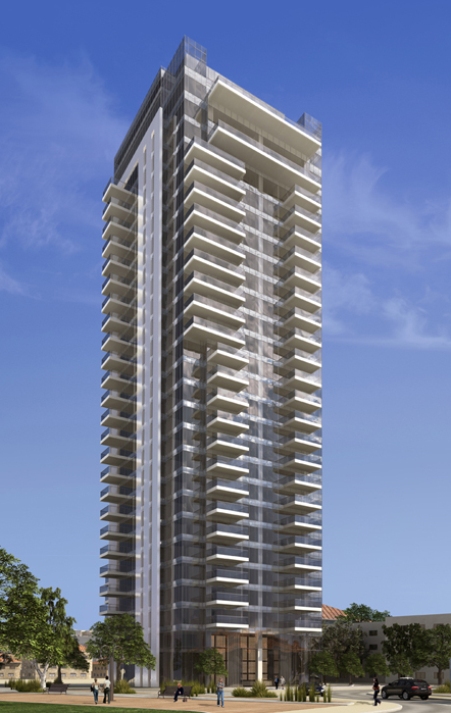
The building is a monolithic glass-covered cube with red "urban" windows. The building is connected by an atrium within which suspended red bridges that remind blood vessels connect the visitors waiting room galleries. An urban gallery with coffee shops and a theater is planned parallel to Weizman Street.
All the news about White City Residence, upcoming skyscrapers in Tel Aviv and other related news...
Pages
Friday, March 25, 2011
Sunday, March 20, 2011
More pictures from White City Residence
Just check the slideshow below for more pictures of White City Residence as well as the other skyscrapers going up in the neighbourhood.
Hat tip Ran Moneta.
Hat tip Ran Moneta.
...
Tuesday, March 15, 2011
40% rise in new homes sales in Tel Aviv in fourth quarter
28,600 apartments were purchased in the fourth quarter of 2011, up 11% from the corresponding quarter, the Ministry of Finance reported today. Seasonal factors with the holidays falling early in the third quarter in 2011 rather than the fourth quarter in 2010 explained part of this rise.
The rise in the fourth quarter of 2011 follows two quarters of falls. In the fourth quarter, there were exceptional rises of 29.4% and 19.3% in home sales in the Beersheva region and Rehovot respectively. Sales of homes in the Beersheva region were the highest in a decade.
The figures show that the dominant reason for the rise in home sales in these two locations was due to a sharp rise in the sales of new homes. In Tel Aviv there was a 40% rise in the sale of new homes in the fourth quarter of 2011 compared with the corresponding quarter.
In contrast, in Netanya the number of home sales fell 1% in the fourth quarter compared with the corresponding quarter, after a fall of 22% in the preceding quarter.
Source Globes
The rise in the fourth quarter of 2011 follows two quarters of falls. In the fourth quarter, there were exceptional rises of 29.4% and 19.3% in home sales in the Beersheva region and Rehovot respectively. Sales of homes in the Beersheva region were the highest in a decade.
The figures show that the dominant reason for the rise in home sales in these two locations was due to a sharp rise in the sales of new homes. In Tel Aviv there was a 40% rise in the sale of new homes in the fourth quarter of 2011 compared with the corresponding quarter.
In contrast, in Netanya the number of home sales fell 1% in the fourth quarter compared with the corresponding quarter, after a fall of 22% in the preceding quarter.
Source Globes
Sunday, March 13, 2011
Aviv Group Acquires Lieber Tower for NIS 200m
The Lieber Tower project situated at 39 Pines Street right next to the Neve Tsedek tower and that became a symbol of the struggle between the residents of Neve Tzedek and luxury tower developers has just changed hands. Aviv Group, controlled by Doron Aviv and Dafna Har Lev, announced today that it has signed an agreement to acquire the complex from Moshe Gavrieli of Intercolony Investments. Aviv will pay about 200 million shekels upfront with a potential extra 10m if flat sales to June 2011 reach NIS 512m.
The current approved plan is a tower of 28 floors with up to 150 apartments. At this point however, the company only plans to bring 105 apartments to market. In May 2009, the local planning and building committee approved construction of a high-rise on the site of the former Lieber chocolate factory south of Neveh Tzdek. Preliminary plans for the project were developed by world-famous architect Daniel Libeskind in collaboration with local architect Rani Zis. The planning for the project has since been taken over by architect Avner Yashar who is also overseeing the Rothschild Ehad and White City Residence projects. Apartments in the tower have been selling so far at prices ranging from NIS 40,000 to NIS 60,000 depending on location.
Aviv Group reports that even before signing the deal 80 apartments totaling NIS 480 million had already been sold. The company estimates that revenues from the project will reach over NIS 560 million. Doron Aviv, Aviv Group Chairman, commented: "Aviv's real estate activity is concentrated in areas where there is high demand. I believe that Tel Aviv, especially in the south, presents us with great business potential and I have no doubt that the area's strategic location will generate great interest among potential buyers as evidenced by the early sales".
Source The Marker
The current approved plan is a tower of 28 floors with up to 150 apartments. At this point however, the company only plans to bring 105 apartments to market. In May 2009, the local planning and building committee approved construction of a high-rise on the site of the former Lieber chocolate factory south of Neveh Tzdek. Preliminary plans for the project were developed by world-famous architect Daniel Libeskind in collaboration with local architect Rani Zis. The planning for the project has since been taken over by architect Avner Yashar who is also overseeing the Rothschild Ehad and White City Residence projects. Apartments in the tower have been selling so far at prices ranging from NIS 40,000 to NIS 60,000 depending on location.
Aviv Group reports that even before signing the deal 80 apartments totaling NIS 480 million had already been sold. The company estimates that revenues from the project will reach over NIS 560 million. Doron Aviv, Aviv Group Chairman, commented: "Aviv's real estate activity is concentrated in areas where there is high demand. I believe that Tel Aviv, especially in the south, presents us with great business potential and I have no doubt that the area's strategic location will generate great interest among potential buyers as evidenced by the early sales".
Source The Marker
Wednesday, March 9, 2011
Controversy over highrise plans for Neve Tzedek
The website of the Residents for Neve Tzedek non-profit shows a simulation of what the historic Tel Aviv neighborhood would look like surrounded by high-rises. Although the developers of the new projects are the ones in the media spotlight, each of them has the services of an architect, a professional who is supposed to be capable of controlling the impact of proposed projects on adjacent areas, particularly low-rise neighborhoods like Neveh Tzedek. Tall buildings are frequently the focus of controversy, not only from area residents who see themselves deprived of light and air, but also among architects.
There are those who argue that high-rises near Neveh Tzedek will solidify the urban fabric of the area and bring a more well-off population to working class south Tel Aviv. Others contend, however, that construction of tall buildings in the area damages the neighborhood both aesthetically and environmentally and imposes a particular burden on the area's infrastructure, which can barely support the neighborhood's current population.
In May of 2009, the local planning and building committee approved construction of a high-rise on the site of the former Lieber chocolate factory south of Neveh Tzdek. Preliminary plans for the project were developed by world-famous architect Daniel Libeskind in collaboration with local architect Rani Zis. The planning for the project has since been taken over by architect Avner Yashar. Yashar was involved in the planning of three of the towers in the area, so his take on the construction of tall buildings in the area is especially significant. He says the debate should focus on whether the buildings are planned well and not whether they should be built. "It's true that any opinion of mine on the issue is suspected of a lack of candor, but I think the magic of the city is the interface among opposites: large and small, dilapidated and well-tended, poor and rich," he said. "I believe that in another 15 years or so, Tel Aviv will triple its number of residents and all of them will have to be housed. There will be high-rises and in my view that's good and they should be embraced lovingly."
Each of the towers Yashar is designing in the area is on an unusual building site, creating variations in planning. The One Rothschild Tower is near the northern end of Neveh Tzedek. The Elhanan East Tower, which has come to be called Neve Tzedek by the Sea, is to the west. The third high-rise, the Lieber Tower, is on an expansive site to the neighborhood's east, in an area that once housed factories. Yashar said the Lieber Tower was approved about 20 years ago as a 17-story office building covering a large area. Newer city plans called for a higher building on a smaller plot of land. The Lieber Tower project sits on an isolated building site, unconnected to its surroundings. Yashar said the tower would be cut off from the surrounding urban area in any event and that a park, through which a future light rail line is to run, is planned between the tower and Neveh Tzedek.
Not all of the high-rises Yashar has planned are divorced from their settings, however. The One Rothschild Tower meets the ground with a kind of glass box, which Yashar says is integrated into a stretch of Ahad Ha'am Street. At Neveh Tzedek by the Sea, the architect's office planned what it calls a pavilion along the length of the street, a four-story building, with commercial space on the ground floor and loft apartments on the upper stories. "It's clear that, in its size, the tower is a divergence from the street, but that is how we attempted to integrate it into the setting and not just to focus on the height [of the project]," Yashar said.
Some of the buildings on the neighborhood activists' list of threats to the neighborhood aren't high-rises at all. Though higher than Neveh Tzedek's historic abodes, a 13-story building is not really a skyscraper. Nonetheless, the 13-story Elifelet Towers at Elifelet and Shlush Streets would have gotten shot down if proposed today. In August city hall announced a ban on construction taller than three stories in Neveh Tzedek itself. The Elifelet project is comprised of ground floor commercial space, two floors of offices and another 10 of apartments.
Project architect Gidi Bar Orian says the lowest 15 meters of the building is designed to fit in with the other buildings in the area, creating the impression, from the perspective of the pedestrian, that the building is simply an extension of existing construction in the area. "We chose not to build with glass, but rather to preserve the look of the construction in the area and its simplicity," he explained.
The Gvulot ("Border" ) Tower on Eilat Street is also on the action committee's list of high-rises, but it is just 11 stories tall. Architect Moshe Tzur, whose office designed the project, said they used the criteria of existing plans for the site and the architecture features unbroken frontage and emphasizes the low streetscape. Architect Shlomo Gertner, who is planning the Elhanan West project, says his design turns the adjoining street into a green boulevard and an extension of Tel Aviv's other boulevards. "We have reduced the area that the buildings occupy by constructing upwards. The buildings along the length of Elhanan Street create the feeling of continuity on the street because the lower floors have a similar design [as other buildings on the street]. The edge of the building is planned with a uniform height, relatively low, with correct spacing between the buildings, creating views of the sea," he says.
Gertner maintains that Tel Aviv is becoming more dense and Neveh Tzedek is becoming a low-density island in an urban ocean. "Residents of Neve Tzedek enjoy low-rise construction, but they cannot force themselves on the entire city. To preserve spaces and nature around the city, one has to create density and therefore turn the relatively low-rise construction of the past into taller building," he said.
Read the rest on Haaretz
There are those who argue that high-rises near Neveh Tzedek will solidify the urban fabric of the area and bring a more well-off population to working class south Tel Aviv. Others contend, however, that construction of tall buildings in the area damages the neighborhood both aesthetically and environmentally and imposes a particular burden on the area's infrastructure, which can barely support the neighborhood's current population.
In May of 2009, the local planning and building committee approved construction of a high-rise on the site of the former Lieber chocolate factory south of Neveh Tzdek. Preliminary plans for the project were developed by world-famous architect Daniel Libeskind in collaboration with local architect Rani Zis. The planning for the project has since been taken over by architect Avner Yashar. Yashar was involved in the planning of three of the towers in the area, so his take on the construction of tall buildings in the area is especially significant. He says the debate should focus on whether the buildings are planned well and not whether they should be built. "It's true that any opinion of mine on the issue is suspected of a lack of candor, but I think the magic of the city is the interface among opposites: large and small, dilapidated and well-tended, poor and rich," he said. "I believe that in another 15 years or so, Tel Aviv will triple its number of residents and all of them will have to be housed. There will be high-rises and in my view that's good and they should be embraced lovingly."
Each of the towers Yashar is designing in the area is on an unusual building site, creating variations in planning. The One Rothschild Tower is near the northern end of Neveh Tzedek. The Elhanan East Tower, which has come to be called Neve Tzedek by the Sea, is to the west. The third high-rise, the Lieber Tower, is on an expansive site to the neighborhood's east, in an area that once housed factories. Yashar said the Lieber Tower was approved about 20 years ago as a 17-story office building covering a large area. Newer city plans called for a higher building on a smaller plot of land. The Lieber Tower project sits on an isolated building site, unconnected to its surroundings. Yashar said the tower would be cut off from the surrounding urban area in any event and that a park, through which a future light rail line is to run, is planned between the tower and Neveh Tzedek.
Not all of the high-rises Yashar has planned are divorced from their settings, however. The One Rothschild Tower meets the ground with a kind of glass box, which Yashar says is integrated into a stretch of Ahad Ha'am Street. At Neveh Tzedek by the Sea, the architect's office planned what it calls a pavilion along the length of the street, a four-story building, with commercial space on the ground floor and loft apartments on the upper stories. "It's clear that, in its size, the tower is a divergence from the street, but that is how we attempted to integrate it into the setting and not just to focus on the height [of the project]," Yashar said.
Some of the buildings on the neighborhood activists' list of threats to the neighborhood aren't high-rises at all. Though higher than Neveh Tzedek's historic abodes, a 13-story building is not really a skyscraper. Nonetheless, the 13-story Elifelet Towers at Elifelet and Shlush Streets would have gotten shot down if proposed today. In August city hall announced a ban on construction taller than three stories in Neveh Tzedek itself. The Elifelet project is comprised of ground floor commercial space, two floors of offices and another 10 of apartments.
Project architect Gidi Bar Orian says the lowest 15 meters of the building is designed to fit in with the other buildings in the area, creating the impression, from the perspective of the pedestrian, that the building is simply an extension of existing construction in the area. "We chose not to build with glass, but rather to preserve the look of the construction in the area and its simplicity," he explained.
The Gvulot ("Border" ) Tower on Eilat Street is also on the action committee's list of high-rises, but it is just 11 stories tall. Architect Moshe Tzur, whose office designed the project, said they used the criteria of existing plans for the site and the architecture features unbroken frontage and emphasizes the low streetscape. Architect Shlomo Gertner, who is planning the Elhanan West project, says his design turns the adjoining street into a green boulevard and an extension of Tel Aviv's other boulevards. "We have reduced the area that the buildings occupy by constructing upwards. The buildings along the length of Elhanan Street create the feeling of continuity on the street because the lower floors have a similar design [as other buildings on the street]. The edge of the building is planned with a uniform height, relatively low, with correct spacing between the buildings, creating views of the sea," he says.
Gertner maintains that Tel Aviv is becoming more dense and Neveh Tzedek is becoming a low-density island in an urban ocean. "Residents of Neve Tzedek enjoy low-rise construction, but they cannot force themselves on the entire city. To preserve spaces and nature around the city, one has to create density and therefore turn the relatively low-rise construction of the past into taller building," he said.
Read the rest on Haaretz
Tuesday, March 8, 2011
Tel Aviv port to finally get long awaited facelift
The 'Yarkon Peninsula' agreement for the purchase and development of the eastern port by Atarim has now been completed. The aim is to open the restored port within a year. According to the plan, the port would become the flagship tourism spot of the 'city that never stops'. Luxury hotels in the Cannes style will replace the garages and Montana ice cream, a marina will be there for docking yachts and the old Maccabiah stadium will become a family recreation center.
They will join clubs, restaurants, galleries and performance halls, a commercial center and an additional 1,000 parking spaces outside of the port area with shuttles going back and forth. A boardwalk will connect the two banks of the Yarkon River and the famous 'flying camel' statue from the historical 'Eastern Fair' of 1936 will be returned to the port's entrance.
Atarim purchased the area in a three stage deal. NIS 35 million ($9.52 million) were paid at this stage. An additional sum is to be paid, or returned subject to an updated evaluation of the property's worth – in seven and 13 years. A surveyor made the current evaluation for Atarim which determined that the value of one dunam (0.247 acres) of Tel Aviv port property is worth $6 million. Ataraim is planning to turn the site into Tel Aviv's largest and leading entertaining spot with expectations of 500,000 visitors every weekend. Atarim, the company responsible for the city's beaches, the northern port and the marina, bought the controlling stake and the properties of the Tel Aviv Development Company, who is responsible for the eastern side of the port.
The ownership of the port was divided between three companies; Atarim owns the northern side, the Tel Aviv Development Company owns the eastern side, which was sold to Atarim by the Jewish Agency and KKL, and the Marine Trust Ltd. owns the western side. The man behind the deal is the Director General of Atarim Itamar Shimoni, who is already planning the next phase: An expropriation letter against the Marine Trust which is being put together by the Harzog-Fox-Neeman Law firm based on a historic expropriation order, in order to turn the Tel Aviv port into one unified stretch of land managed by Atarim. The Tel Aviv Development Company was established in 1937. Wednesday's move, which saw Atarim take ownership of the Development Company, decreases the number of owners of the port area. The negotiations went on for four years, led by Atarim chairman Herzl Shalem, Director General Shimoni and supported by Tel Aviv Mayor Ron Huldai.
Meanwhile, efforts are being made to complete the regional zoning plans. The goal: provide luxury hotel rooms in a city where the hotel room shortage is huge, as is the demand. Alfred Akirov has already declared his interest in building a hotel there, following the Mamilla hotel in Jerusalem as well as his Paris and London hotel ventures. The main battle will be against the legendary Montana ice cream shop, the city's main hotspot in the 1960s. Its owners will probably not give up the historic spot easily. Atarim intends to vacate the shop and an additional 70 properties, mainly garages and manufactories. "Montana can't stay," says Shimoni. "The new look doesn't fit in with such an outdated structure. The center will be completely recreation focused." Director general of the Marine Trust, Moshe Hendels said in response: "There is an expropriation decision from 1973 but nothing was done about it for 38 years. The Marine Trust has been managing the port since 1936. It fulfilled the expropriation purposes which is no longer useful. When the demand comes along, I assume tat the board of directors will convene and oppose the move."
Source Ynet
They will join clubs, restaurants, galleries and performance halls, a commercial center and an additional 1,000 parking spaces outside of the port area with shuttles going back and forth. A boardwalk will connect the two banks of the Yarkon River and the famous 'flying camel' statue from the historical 'Eastern Fair' of 1936 will be returned to the port's entrance.
Atarim purchased the area in a three stage deal. NIS 35 million ($9.52 million) were paid at this stage. An additional sum is to be paid, or returned subject to an updated evaluation of the property's worth – in seven and 13 years. A surveyor made the current evaluation for Atarim which determined that the value of one dunam (0.247 acres) of Tel Aviv port property is worth $6 million. Ataraim is planning to turn the site into Tel Aviv's largest and leading entertaining spot with expectations of 500,000 visitors every weekend. Atarim, the company responsible for the city's beaches, the northern port and the marina, bought the controlling stake and the properties of the Tel Aviv Development Company, who is responsible for the eastern side of the port.
The ownership of the port was divided between three companies; Atarim owns the northern side, the Tel Aviv Development Company owns the eastern side, which was sold to Atarim by the Jewish Agency and KKL, and the Marine Trust Ltd. owns the western side. The man behind the deal is the Director General of Atarim Itamar Shimoni, who is already planning the next phase: An expropriation letter against the Marine Trust which is being put together by the Harzog-Fox-Neeman Law firm based on a historic expropriation order, in order to turn the Tel Aviv port into one unified stretch of land managed by Atarim. The Tel Aviv Development Company was established in 1937. Wednesday's move, which saw Atarim take ownership of the Development Company, decreases the number of owners of the port area. The negotiations went on for four years, led by Atarim chairman Herzl Shalem, Director General Shimoni and supported by Tel Aviv Mayor Ron Huldai.
Meanwhile, efforts are being made to complete the regional zoning plans. The goal: provide luxury hotel rooms in a city where the hotel room shortage is huge, as is the demand. Alfred Akirov has already declared his interest in building a hotel there, following the Mamilla hotel in Jerusalem as well as his Paris and London hotel ventures. The main battle will be against the legendary Montana ice cream shop, the city's main hotspot in the 1960s. Its owners will probably not give up the historic spot easily. Atarim intends to vacate the shop and an additional 70 properties, mainly garages and manufactories. "Montana can't stay," says Shimoni. "The new look doesn't fit in with such an outdated structure. The center will be completely recreation focused." Director general of the Marine Trust, Moshe Hendels said in response: "There is an expropriation decision from 1973 but nothing was done about it for 38 years. The Marine Trust has been managing the port since 1936. It fulfilled the expropriation purposes which is no longer useful. When the demand comes along, I assume tat the board of directors will convene and oppose the move."
Source Ynet
Sunday, March 6, 2011
Is Israel a tax haven?
With the extreme turmoil in the Middle East and with Israel surrounded by real and potential enemies, perhaps this is not the time to consider citizenship in the State of Israel. But an intriguing article has been published by the Tel Aviv law firm of Udi Barzilai, former deputy head of the Israel Tax Authority.
Defying the international attacks on all tax havens led by the Organization for Economic and Community Development (OECD), Israel has eased its tax laws in an obvious effort to attract new residents and eventual citizens – and in so doing may have made itself into a limited tax haven of sorts.
Very Attractive Tax Breaks
Up until now Israeli tax law allowed new immigrants with substantial income from foreign source investments an exemption from most exchange controls and they could hold assets wherever they wished in any currency. During the first ten years of residence, a new immigrant could even be exempt from income and capital gains taxes on foreign source income.
Under the new Israeli Tax Amendment 168, which some are calling “revolutionary,” an individual who immigrates to Israel, if certain conditions are met, not only gets a 10-year full tax exemption, but also has no tax reporting requirements. Under another new law, the Economic Efficiency Law 2009, the Finance Minister has authority to double the 10-year tax free period to 20 years, if the persons makes a “significant investment” in Israel. It is unclear how Israel can square these new tax benefits, especially non-reporting, with tax information exchange agreements Israel has signed with other countries. Also Israel is in the process of qualifying as an OECD member and that anti-tax competition group will no doubt have questions.
The Law of Return
Israel’s official immigration policy is unique in that it welcomes scattered Jews of the world (“the Diaspora”) to the Jewish homeland. Adopted in 1950, the “Law of Return” decrees that anyone with one Jewish grandparent has an automatic right to Israeli citizenship, even if they are not observant religious Jews. The law provides an automatic second passport and dual citizenship for all who qualified. Under the Law of Return, Jews are granted Israeli citizenship 90 days after immigrating there. Non-Jews who reside in Israel for three years of a five-year period, intending to settle there also may apply for Israeli citizenship, but they must renounce their former nationality.
Major Tax Shelter
Considering the political and tax implications of these tax laws Israel may be providing high net worth individuals with a unique opportunity to transfer funds from offshore jurisdictions and financial centers into Israel with no taxes and no reporting. While Israel has not been classified previously by the OECD as a tax haven, one wonders how long their new tax laws will last before the usual anti-tax haven OECD barrage begins. It may be a coincidence that the Financial Times has reported that the U.S. Justice Department and Internal Revenue Service are investigating information about U.S. persons’ accounts held at Bank Leumi in Israel.
Source Sovereign Society
Defying the international attacks on all tax havens led by the Organization for Economic and Community Development (OECD), Israel has eased its tax laws in an obvious effort to attract new residents and eventual citizens – and in so doing may have made itself into a limited tax haven of sorts.
Very Attractive Tax Breaks
Up until now Israeli tax law allowed new immigrants with substantial income from foreign source investments an exemption from most exchange controls and they could hold assets wherever they wished in any currency. During the first ten years of residence, a new immigrant could even be exempt from income and capital gains taxes on foreign source income.
Under the new Israeli Tax Amendment 168, which some are calling “revolutionary,” an individual who immigrates to Israel, if certain conditions are met, not only gets a 10-year full tax exemption, but also has no tax reporting requirements. Under another new law, the Economic Efficiency Law 2009, the Finance Minister has authority to double the 10-year tax free period to 20 years, if the persons makes a “significant investment” in Israel. It is unclear how Israel can square these new tax benefits, especially non-reporting, with tax information exchange agreements Israel has signed with other countries. Also Israel is in the process of qualifying as an OECD member and that anti-tax competition group will no doubt have questions.
The Law of Return
Israel’s official immigration policy is unique in that it welcomes scattered Jews of the world (“the Diaspora”) to the Jewish homeland. Adopted in 1950, the “Law of Return” decrees that anyone with one Jewish grandparent has an automatic right to Israeli citizenship, even if they are not observant religious Jews. The law provides an automatic second passport and dual citizenship for all who qualified. Under the Law of Return, Jews are granted Israeli citizenship 90 days after immigrating there. Non-Jews who reside in Israel for three years of a five-year period, intending to settle there also may apply for Israeli citizenship, but they must renounce their former nationality.
Major Tax Shelter
Considering the political and tax implications of these tax laws Israel may be providing high net worth individuals with a unique opportunity to transfer funds from offshore jurisdictions and financial centers into Israel with no taxes and no reporting. While Israel has not been classified previously by the OECD as a tax haven, one wonders how long their new tax laws will last before the usual anti-tax haven OECD barrage begins. It may be a coincidence that the Financial Times has reported that the U.S. Justice Department and Internal Revenue Service are investigating information about U.S. persons’ accounts held at Bank Leumi in Israel.
Source Sovereign Society
Friday, March 4, 2011
Henry Taic's 600-room hotel on Hayarkon approved
The Tel Aviv Local Planning and Building Committee today approved 820 new hotel rooms in Tel Aviv. This includes a 600 room hotel which will be built by businessman Henry Taic in Hayarkon Street, and a 220 room hotel as part of the conversion of the Lev Tel Aviv police station in Dizengoff Street into a hotel and residential project.
Taic's Nahal Group plans on building the Forum Palace Hotel which will comprise two 17 floor buildings in the excavated land where the old Sheraton hotel was once located. In addition to the 600 rooms above ground, the hotel will have banqueting halls, restaurants, cafes and service areas as well as a two floor underground car park.
Taic's Nahal Group is also building Israel's first Kempinski Hotel as part of the David Promenade Residences on Herbert Samuel Street at an investment of NIS 200 million as well as the first Waldorf Astoria just north of the Hilton hotel.
Source Globes
Taic's Nahal Group plans on building the Forum Palace Hotel which will comprise two 17 floor buildings in the excavated land where the old Sheraton hotel was once located. In addition to the 600 rooms above ground, the hotel will have banqueting halls, restaurants, cafes and service areas as well as a two floor underground car park.
Taic's Nahal Group is also building Israel's first Kempinski Hotel as part of the David Promenade Residences on Herbert Samuel Street at an investment of NIS 200 million as well as the first Waldorf Astoria just north of the Hilton hotel.
Source Globes
Subscribe to:
Posts (Atom)