Pages

Saturday, January 29, 2011

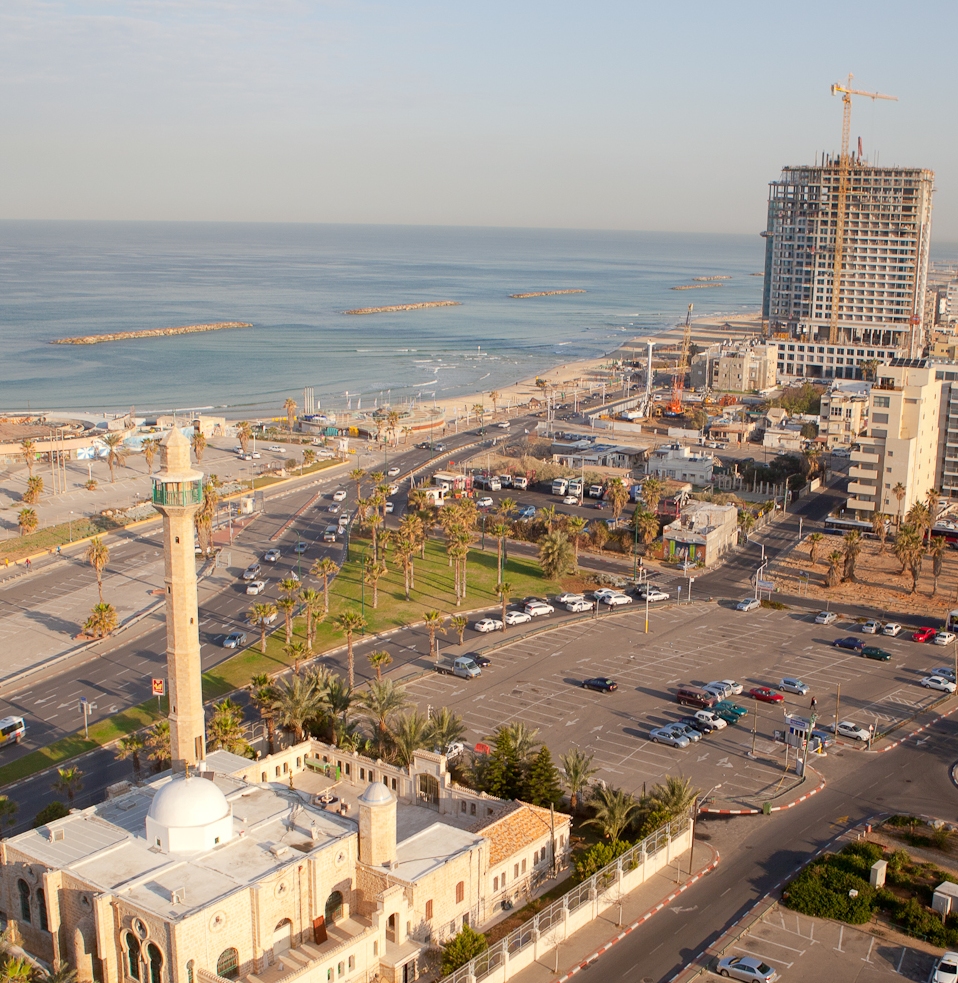
Ofer Tower construction has now started


Construction has now started on 10 Herbert Samuel, also known as the Ofer tower as the picture above shows. The building will have 21 floors as well as a lower section adjacent to the tower. Each floor will be 520 sqm gross and 400 sqm net. There will be about 30 residential units on 20,000 square meters. The design and distribution is similar to the G-Tower that was also designed by Rani Ziss Architects. Ofer Tower had made the news last summer when Eyal Ofer bought the top flat in the project for a cool NIS 115 million.

Wednesday, January 26, 2011

Building permit in Israel takes three times as long...

The OECD included Israel in a housing market report for the first time since its accession. The "Housing and the Economy: Policies for Renovation" report includes Israel in its list of countries where home prices were stable or declined between 1980 and 2008 (the last year for data for this table), but in other aspects of housing policies, including regulations on land use, construction, and rent, Israel's record is not outstanding, to put it mildly.

Israel's response (building starts) to higher demand for housing and higher prices is among the lowest in the OECD. The US tops the charts on this factor; Israel is ranked 15th. The report says that a government's response, or lack thereof, to the housing shortage is in direct correlation to the shortage of land and land use regulations. In two studies, Israel was near the bottom of the table. In Israel, a building permit takes almost 150 days to obtain. In comparison, building permits take less than 50 days to obtain in the US, Canada, Finland, and other countries.

Israel is second to last in terms of regulations on the rental market. Rent control is tightest in Sweden; only Finland is laxer than Israel. In the tenant-landlord regulations table, only the US is laxer than Israel. Sweden has the tightest regulations in that section as well. The report is a chapter in the upcoming OECD "Economic Policy Reforms: Going for Growth 2011" report. Some of the housing report's conclusions are especially relevant to the contemporary Israeli housing market. They include improving the responsiveness of building starts to market demand, reviewing building licensing procedures, which restrict housing starts, and reviewing land use regulations, which block development.

Source Globes

Sunday, January 23, 2011

More on the Tel Aviv Master Plan

Halfway through his third term in power, Tel Aviv Mayor Ron Huldai is promoting his most ambitious project yet: an ambitious master plan, meant to guide the city’s explosive development over the coming decades. The magnitude of the plan is difficult to overstate; the mayor himself has described it as a “constitution” for the city. Yet, try Googling the master plan and you’ll find almost nothing. Amazingly, despite the enormous impact it is expected to have on the city, the plan has yet to be released to the public in full.

While some information about the contents of the plan is buried deep inside the municipality’s website, the city’s well-oiled PR machine has made no serious effort to bring it to the attention of the general public.

The map on the left however reveals quite a lot. It displays height planning for the city, showing the location of upcoming high rises in dark and evidencing how the plan will transform the city’s skyline beyond recognition. Just click on the map to display the full size version.

While low skylines will be preserved in the centre of town and in parts of Jaffa, areas east of the city center would be transformed into a forest of skyscrapers. In a victory for real estate interests over long-standing opposition by residents, the plan would also allow for extensive high-rise construction in the south of the city, creating multiple corridors of office and residential towers, which would hover awkwardly above existing low-rise neighbourhoods.

Saturday, January 22, 2011

Israel’s house price bubble inflates further

Despite tighter lending policies and repeated warnings from the Central Bank, house prices continue to rise in Israel at double-digit rates. Although the rate of increase has somewhat eased, the monetary authorities are clearly worried. The average price of owner-occupied dwellings rose 16.4% y-o-y and 4.4% q-o-q to Q3 2010, according to data from the Central Bureau of Statistics. Although the annual price increase was lower than the 22% surge in Q4 2009, it was the sixth consecutive quarter of double digit price increase.

Strong price increases were seen throughout the country. In Tel Aviv, the economic centre, the average house price rose 17.75% y-o-y to ILS 1.778 million (US$499,245). In Jerusalem, the 17.5% price increase pushed average prices to ILS1.42 million (US$398,216). Annual price increases in other administrative regions ranged from 15% in the South, to 20% in Haifa. The current upswing in house prices has pushed the national average price, at ILS1.05 million (US$294,660) up by 37% during the period from Q4 2008 to Q3 2010. Over the same period, the average price in Tel Aviv has risen by an astonishing 46%, and in Jerusalem by 30%.

Although strong economic growth, low interest rates and the long period of relative peace (i.e. there are no major hostilities) provide a basis for strong price increases, speculative investment is clearly playing a role in pushing house prices. Loose monetary policies are also making funds for speculative buying easier to access. Excessive house price growth was cited as among the reasons for raising the key rate several times in 2010 (in March, July and Sept).

Housing in Israel is also a political tool. In some areas, house prices are depressed by huge amounts of new construction, especially in new settlements in disputed areas. Buying houses in these areas is viewed by some Israelis as part of their patriotic duty. The Bank of Israel, the central bank, is expected to raise key interest rates n January or February to contain inflationary pressures. The headline rate, at 2% since October 2010, is expected to be raised by 25 percentage points.

Source Global Property Guide

Tuesday, January 11, 2011

Apartment prices in Tel Aviv rose 30% in 2010

2010 ended with no good news for Israeli homebuyers. Sellers are in no hurry to deal. Asking prices on classified ads site Homeless in December mainly show that prices crept upwards, continuing the two-year trend. Lower prices were negligible and showed no clear breakdown by region.

The average price of a four-room apartment in 2010 showed double-digit growth in most of the country compared with 2009. Beersheva had the sharpest increase, at 30% to NIS 652,000 in December 2010 from NIS 503,000 a year earlier. The average price of a four-room apartment was NIS 363,000 in 2006. These prices explain investors' rush to areas where homes can be bought with relatively little equity of their own.

The average price of a four-room apartment rose 28% in Tel Aviv to NIS 2.74 million in December 2010 from NIS 2.5 million a year earlier (the average price was NIS 1.1 million in 2006). The increase of NIS 509,000 is nearly the price of an equivalent apartment in Beersheva. The average price of a four-room apartment rose 29% in Haifa, 22% in Jerusalem, 25% in Holon and Bat Yam, 21% in Petah Tikva, and 20% in Rishon LeZion.

Source Globes

Friday, January 7, 2011

Dolphinarium to be razed at last

The seaside space occupied by the neglected remains of the Tel Aviv Dolphinarium will be developed into a new boardwalk, the city decided yesterday. The Tel Aviv Planning and Building Council reapproved the plan to renovate the site into a public space but the city will need to buy out an 18.5-dunam area from a private lease-holder, Yossi Buchman.

In exchange, Buchman will get a 12-dunam area near the Hassan Bek Mosque on Hayarkon Street, on which he can build two residential towers and a hotel: 48,000 square meters in total built-up area, according to approved rights for the spot. Buchman is being asked to pay 31.5% of the difference in value between the land by the mosque and the land on which the remains of the Dolphinarium are situated. An appraisal dating from 2008 priced the land by Hassan Bek at NIS 500 million, while the value of the Dolphinarium land was priced at NIS 80 million. Buchman will have to pony up more than NIS 120 million, not including betterment tax.

The plan to develop the defunct Dolphinarium has been held up for more than 10 years, in part because the municipality, Buchman and the Israel Lands Administration couldn't agree on money issues. As similar plan won approval in 2002, but was torpedoed by continued haggling. Observers in the real estate sector think it may take around two years for the land deal to go through. During that time the city will continue to negotiate with Buchman over evacuating and razing the Dolphinarium.

The Dolphinarium began its life as a dolphin-centric aquarium, but was abandoned in the mid-1980s as the company running the venue stumbled into financial trouble. It was acquired by Buchman's company, Sha'ar LeYisrael. The Dolphinarium building consists of one underground story and two above ground, some of which is used for entertainment venues and some of which has been abandoned. The city of Tel Aviv wants to create a continuous boardwalk from Bat Yam to Herzliya. The Dolphinarium building was the only obstacle after certain buildings belonging to the Gordon Swimming Pool and the Reading Power Station were razed. Peer Weisner, deputy mayor of Tel Aviv and acting chairman of the local Planning and Building Committee, said he opposes the deal. "The city of Tel Aviv should revert to its previous resolution and expropriate the land from [Buchman]," Weisner said.

The Dolphinarium has an infamous reputation in Israel, after a suicide bomber attacked a line of party-goers outside a club there on June 1, 2001, killing 21 and injuring 132. Most of the casualties were immigrant teenagers from the former Soviet Union.

Source The Marker
Thursday, January 6, 2011

Home prices not cooling off anytime soon

Bank Leumi does not believe that Israel's hot real estate market will cool off anytime soon. The bank said, in an entry on its blog, that high demand for new homes, combined with the low supply, do not indicate any change in the current upward trend in home prices.

Bank Leumi says that sales of privately-built new homes rose in October and November 2010, after slowing somewhat during the third quarter. New home sales rose 8.3% in January-November, compared with the corresponding period in 2009.

The bank says that one of the factors driving new home sales is low mortgage interest rates. The average interest rate on CPI-linked mortgages is a low rate of 2.2%. The average interest rate on five-year mortgages is 2.05%, and the average interest rate on 20-year mortgages is 3.16%. Bank Leumi says that, for now at least, it seems that Supervisor of Banks Rony Hizkiyahu's efforts to make mortgages more expensive are not working. Furthermore, the drop in the average interest rate on CPI-linked mortgages has been paralleled by an increase in the annualized pace of credit for housing.

Source Globes

Tuesday, January 4, 2011

Henry Taic to open yet another hotel in Tel Aviv

After the David Intercontinental and the upcoming Kempinski, Henry Taic is now negotiating with Tel Aviv municipality to open his third hotel on the Tayelet under the Waldorf Astoria brand, right next to the Hilton hotel in Tel Aviv.

The chain's first hotel will be opened by the Canadian Reichman family in 2011 in Jerusalem, opposite businessman Alfred Akirov's Mamilla Hotel, at a total investment of $100 million. It is expected to be Israel's most luxurious hotel. Developer Henry Taic plans to build the second Waldorf Astoria Hotel on the area north of the Tel Aviv Hilton Hotel, which includes its parking lot and gas station. The new hotel will be integrated into the activity of the historic hotel located near Independence Park.

According to Architect Moshe Zur, who is conducting the negotiations with the Tel Aviv Municipality, it is still unclear home many floors or rooms the hotel will have and whether it will include vacation flats. Taic confirmed the existence of construction plans near the Hilton, adding that it would be a long process. In any event, the new hotel's location is not expected to block the Hilton guests' view.

Two Waldorf Astoria hotels in Israel will expand the country's five-star deluxe hotel industry, which includes the two Ritz hotels being built in the Herzliya Marina and on Tel Aviv's Rothschild Boulevard and the Four Seasons Hotel planned in Jerusalem's German Colony.

The Jerusalem hotel, being built by the Hilton corporation and the IPC Jerusalem company within the historical Palace hotel, is located on the corner of King David and Agron Streets – short walking distance from the Old City – and will include 220 rooms and suites and 30 residential apartments. Waldorf Astoria Collection currently has five hotels, four of them in the United States. The Jerusalem hotel will be the second one located outside the US after the hotel in Jeddah, Saudi Arabia.

Source Yedioth Ahronoth